The Oldsmobile 442 wasn’t just a car. To Earl Jennings, it was the heartbeat of his youth — the roar of a summer long gone, the symbol of everything wild, fast, and free. Painted deep ocean blue with white racing stripes, it gleamed even under the dim garage light, like a sleeping legend waiting to wake.
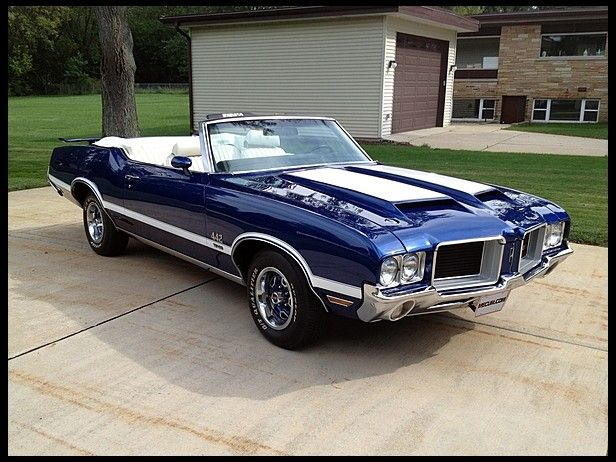
Earl first bought the car in 1972, fresh out of high school. He was twenty and reckless, with a pocketful of dreams and a head full of gasoline. The day he brought that 442 home, his mother shook her head and said, “You’ll wrap yourself around a tree before you learn to love anything else.” But Earl just smiled. He knew better. This wasn’t just about speed — it was about feeling alive.
For years, the car carried him through the best and worst moments of his life. He met Linda at a roadside diner off Route 66, the 442 gleaming out front like a magnet. She’d walked right up to it, leaned down, and said, “Nice ride, stranger.” They were married a year later.
They drove that Oldsmobile across states — from the dusty plains of Oklahoma to the shimmering coasts of California. The top down, her laughter whipping through the air, the radio humming old rock songs that seemed to stretch the road endlessly ahead. It wasn’t just a car anymore. It was their story.
But time has a way of dulling even the brightest chrome. By the 1990s, the 442 sat more often than it ran. Kids, bills, and real life had crept in. The once roaring engine now slept beneath layers of dust and forgotten weekends. When Linda passed, Earl couldn’t even open the garage for months. The silence was too heavy, too final.
Then one summer, decades later, Earl’s grandson Mason came to visit. He was sixteen, restless, and had more interest in screens than steel. But something changed when he found the blue Oldsmobile under its old tarp.
“What’s this, Grandpa?”
Earl looked up from his coffee. “That, boy, is Blue Thunder.”
“Does it run?”
Earl chuckled. “Hasn’t in twenty years. But maybe she just needs someone to remind her how.”
They worked on it all summer. Mason learned how to turn a wrench, how to change plugs, how to listen — really listen — to an engine’s heartbeat. Each clang of a socket echoed like a memory, each turn of the key brought back a flash of Linda’s laughter, the smell of her perfume mingling with gasoline.
The day it started, the garage shook. The deep growl filled the air — not just an engine’s roar, but the sound of something coming back to life. Earl grinned so wide his face hurt. Mason whooped and clapped his hands like a little kid.
“She’s alive, Grandpa! She’s really alive!”
Earl nodded, his eyes misty. “Told you, boy. She just needed to remember who she was.”
That weekend, they took the car out for a drive. The same road where Earl once raced under moonlight, now lined with new houses and old memories. The wind caught Mason’s hair, and Earl swore he could almost hear Linda’s voice again, carried in the hum of the engine.
“You did good, old girl,” he whispered, patting the dash.
As the sun dipped low, turning the blue paint into a pool of liquid gold, Mason glanced over and said, “Grandpa, when you’re gone… what’ll happen to her?”
Earl smiled, eyes on the horizon. “You’ll take her, son. And when you drive, you’ll remember — it’s not about the destination. It’s about the ride.”
The 442 purred beneath them, steady and sure, the echo of a lifetime stretching out across the open road — one generation passing the torch to the next, carried on four wheels of chrome and memory.