WASHINGTON ‒ With consumers focused on affordability heading into the holiday season, Federal Reserve Chair Jerome Powell said he hears Americans’ concerns over high costs “loud and clear.”
Still, it was a divided Federal Open Market Committee that on Dec. 10 ordered another quarter-point cut to its benchmark federal funds rate to a range of 3.5% to 3.75%. It’s a move aimed at preventing further cooling in the labor market. However, lower borrowing costs could encourage more spending, raising demand, and, potentially, prices.
Read More: https://www.heart-sync.info/
“Affordability” has become the watchword of the moment, shaping political campaigns and serving as the centerpiece of President Donald Trump’s cross-country tour he kicked off Dec. 9. Persistent fears about affordability shape day-to-day decisions for many, research suggests. A poll from the progressive think tank the Century Foundation, shared exclusively with USA TODAY, found some Americans are skipping medical care and meals, as well as dipping into savings to cover essentials.
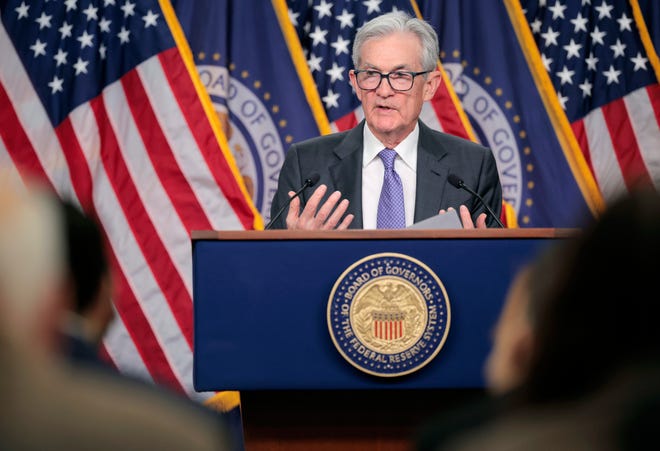
Powell, speaking during a news conference after the central bank’s two-day meeting, said consumers are facing “really high” costs and said the Fed is “working hard” to make Americans’ lives more affordable.
“A lot of that is not the current rate of inflation. A lot of that is just embedded higher costs due to higher inflation in 2022 and ‘23,” Powell said, adding he thinks the annual inflation rate is already hovering near the Fed’s 2% target when tariff costs are excluded. “The best thing we can do is restore inflation to its 2% goal, and our policies are intended to do that, but also have a strong economy where real wages are going up.” Holiday shopping: We found the best Cyber Week deals for you.
Powell said the December cut marks a transition from restrictive to neutral policy, meaning interest rates are no longer intended to slow nor stimulate the economy.
Division persists given ‘no risk-free path’
Not everyone was on board with the cut. Powell said there is “no risk-free path” for policy, a sentiment he shared in October.
“Different perspectives on various labor market indicators and the impact of tariffs, among other disagreements, are leading to more dissenting votes than we’ve seen in decades,” Cory Stahle, an economist at Indeed, said in a note.
Stephen Miran, Trump’s latest appointee to the Fed’s Board of Governors, continued his streak of dissents, preferring a half-point cut. Reacting to the quarter-point trim Dec. 10, Trump said the cut “could have been doubled.”
Two other committee members, Austan Goolsbee and Jeffrey Schmid, who have warned potential tariff-driven inflation pressures shouldn’t be dismissed, preferred to hold rates steady.
To Seema Shah, chief global strategist at Principal Asset Management, these dissents weren’t surprising.
“With the recent scarcity of economic data and the wide dispersion in neutral rate estimates, it is hard to imagine any level of confidence in the economy that would lead to unanimous Fed voting,” Shah said in a note.
What the rate cut means for your wallet
For Americans hoping for a decrease in the cost of living, the Fed’s quarter-point rate cut won’t mean much, according to David Stubbs, chief investment strategist at AlphaCore Wealth Advisory.
He said the move will not do much to change the affordability of household goods, nor will it bring down housing costs, given mortgages are driven by longer-term interest rates out of the Fed’s control.
“The housing market faces some really significant challenges and I don’t know that a 25-basis point decline in the federal funds rate is going to make much of a difference for people,” Powell said, adding housing supply in the United States is low and it would be expensive for people who got low-rate mortgages during the pandemic to move.
Still, the rate cut should mean lower borrowing costs. Stubbs said consumers with floating-rate debt, including auto-loans, will likely see lower interest rates. He added savers may receive lower interest rates on their short-term fixed income investments.
While the Fed’s decision aims to prevent further cooling in the job market, Oxford Economics’ Chief Global Economist Ryan Sweet isn’t confident the Fed will be able to help the labor market “because of what ails it.”
“Rate cuts are unlikely to significantly boost the hiring rate, which is being depressed by overhiring, solid productivity growth, policy uncertainty, a rise in people with multiple jobs, and less immigration,” Sweet said in a note. “Monetary policy can’t solve many of these issues.”
What to expect from the Fed in 2026
The Fed’s dot plot, a chart mapping what policymakers think interest rates will be in the future, shows the median committee member forecasts only one quarter-point cut in 2026.
However, the December dot plot may reveal “less than usual” about the interest rate outlook for two reasons, according to Comerica Bank Chief Economist Bill Adams.
“First, they know less than usual about the current state of the economy because the shutdown delayed the release of economic statistics,” Adams said in a note. “Second, the Fed’s guidance doesn’t account for how its approach will change after Chair Powell’s term ends in May.”
Nonetheless, division among committee members suggests a high bar for further rate cuts next year, according to Stubbs.
“This growing pattern of disagreement puts considerable attention on the upcoming January meeting and the future Fed Chair’s ability to gather support,” Bankrate Financial Analyst Stephen Kates said in a note.
Sweet added he expects the Fed may want to hold off on changing its federal funds rate for some time to allow this cut, and the two previous ones, to impact the economy.